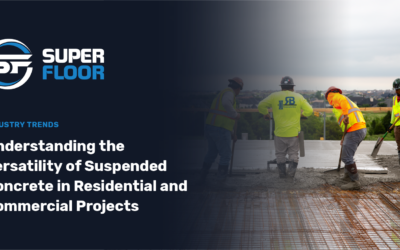

Suspended concrete floors are essential components in modern construction, offering strength and versatility for a wide range of buildings. If you’re curious about how these floors are installed, this guide will walk you through the steps involved.
Understanding Suspended Concrete Floors
Before diving into the installation, it’s important to understand what suspended concrete floors are and why they’re used. These floors are often found in commercial buildings where strength and support are key.
Suspended concrete floors are distinct from ground-bearing floors. The main difference lies in their support mechanism. These floors don’t rest directly on the ground but are instead supported by beams, columns, or walls, creating a gap or void beneath them. This makes them an ideal solution in various structural scenarios, such as multi-story buildings and situations where ground conditions are unstable.
Choosing suspended concrete floors brings several advantages. Firstly, their design inherently allows for the redistribution of loads, providing reinforced strength across the entire flooring area. Secondly, they offer better resistance to subsidence or uneven settling of the building foundation, a crucial factor for long-term durability.
Preparing the Site
The first step in installing a suspended concrete floor is preparing the construction site. This includes ensuring a clear, safe environment and setting up necessary supports and formwork.
Site preparation involves more than just clearing the area. Assessment of the soil and immediate environment is crucial, as this determines the type of support and any additional groundwork required. Ground conditions can significantly impact the choice between various structural support systems like steel beams or concrete plinths.
Another crucial element is the planning and design phase, where engineers and architects collaborate using detailed blueprints to ensure all elements are in place. This stage is vital to avoid costly errors and ensure all components fit together seamlessly during installation.
Setting Up Formwork
Formwork is essential as it shapes the concrete before it sets. It’s crucial to install formwork accurately to ensure the floor will be level and structurally sound.
Think of formwork as the mold for the concrete. It can be made of wood, steel, or other materials, and its design must be meticulously planned. The precision in setting up formwork determines the final dimensions of the concrete slab. Any misalignment at this point can lead to uneven flooring, which could affect structural integrity or require costly corrections.
Moreover, formwork must be robust enough to handle the pressure of the wet concrete without shifting or breaking. This involves securely bracing and anchoring it to withstand the weight and ensure consistency during the pouring process.
Reinforcing with Steel
Steel reinforcement is added to the formwork to increase the tensile strength of the concrete. This reinforcement is a critical step to ensure the longevity of the floor.
The process of reinforcing with steel involves arranging rebar or mesh within the formwork. The placement must follow strict engineering specifications to ensure the distribution of stress is well-managed across the floor. The reinforcement must cover critical areas such as edges and joins, where stress concentration is likely higher.
Furthermore, the choice of reinforcement depends on the specific requirements of the project. Sometimes, fibers or new composite materials may be incorporated for additional reinforcement, contributing to greater flexibility and strength of the concrete floor.
Pouring the Concrete
Once everything is set, concrete is poured into the formwork. It’s spread evenly and worked into any corners using specialized tools to ensure no air pockets remain.
Pouring concrete might seem straightforward, but precision is key. The mix’s consistency should be just right to ensure it flows smoothly without segregating or collecting in one spot. Workers must remain vigilant, constantly checking the even distribution to preempt any problems.
Tools like vibrators are often employed in this stage to help remove trapped air, which, if left unaddressed, can compromise the structural integrity of the hardened concrete by creating weak points or voids.
Allowing the Concrete to Cure
After pouring, it’s important to let the concrete cure. This phase can take several weeks, depending on the weather conditions, and is vital for achieving maximum strength.
The curing process involves a chemical reaction where the concrete hardens and gains strength over time. It’s imperative that this is done at a controlled pace to prevent cracks or weaknesses.
Temperature and humidity are critical factors during curing. In hot climates, moist curing techniques are used, like covering the slab with wet burlap or plastic sheets to retain moisture. Conversely, during cooler periods, insulated blankets might be used to maintain the necessary warmth for curing.
Wrapping Up the Process
Suspended concrete floors are a durable and versatile option for any construction project. Understanding the installation process helps in appreciating the skill and precision involved in creating these sturdy floors. Now, you’re familiar with the essential steps in installing a suspended concrete floor.